


Blog > Selling a Pierce County Home With Foundation Issues
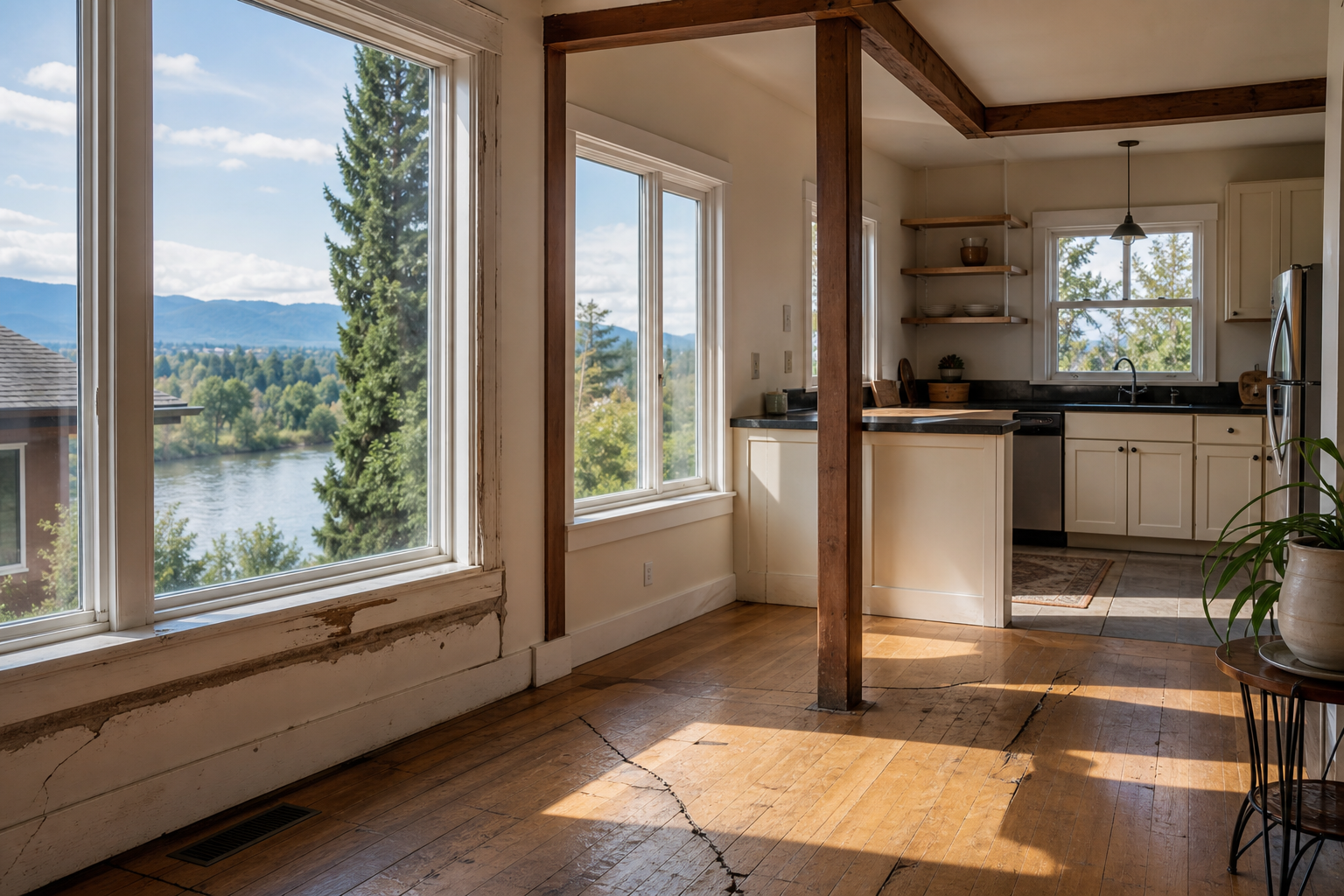
Do you have to disclose foundation problems when selling a home in Pierce County, WA?
Yes — Washington law requires you to disclose known foundation and structural issues on the Seller Disclosure Statement (Form 17) under RCW 64.06. There is no legal path around it, even if you're selling as-is or to a cash investor. Once you've disclosed, you have three real choices: repair and list to the broadest buyer pool, price the home to reflect the condition, or target investors who specialize in structural rehabs. Which path makes sense depends on the severity of the issue, your timeline, and what the Pierce County market will bear right now.
What Washington Law Actually Requires — and What Happens If You Skip It
Let's start with the legal floor, because this is the one thing that isn't negotiable.
Washington's Residential Real Property Transfer Act — codified at RCW 64.06 — requires most sellers of 1–4 unit residential property to provide buyers with a completed Form 17 before closing. That form explicitly asks about foundation movement, settlement, structural problems, and any prior repairs. If you know about it, you disclose it. Full stop.
The buyer's side of that equation matters too. Under the same statute, buyers who receive Form 17 have three days to approve or rescind their offer. If you fail to provide Form 17 when required, that rescission window can extend all the way to closing — meaning a buyer could walk away at the last minute with their earnest money.
And if you knowingly conceal a material defect? Washington law exposes sellers to liability for negligent or fraudulent misrepresentation. I've seen post-closing disputes over undisclosed foundation work get expensive and ugly fast. Disclosure isn't just the ethical move — it's the one that protects you after the sale.
What Form 17 actually covers
Form 17 asks specifically about foundation settlement, sloping floors, wall cracking, prior structural repairs, and whether you've had any engineering evaluations done. If you've had a contractor stabilize a wall, had piers installed, or hired an engineer who gave you a written report — all of that goes on the form. Local agents in Pierce County routinely advise sellers to disclose prior foundation work even when the issue is believed to be fully resolved, because omitting a known repair history is exactly the kind of thing that triggers post-closing claims.
"As-is" doesn't mean disclosure-free
This is one of the most common misconceptions I run into. Sellers hear "as-is" and assume it creates a clean break from liability. It doesn't. Marketing a home as-is in Tacoma or Puyallup signals to buyers that you won't make repairs — it does not waive Washington's statutory disclosure obligations under RCW 64.06. Local attorneys and brokers are consistent on this point. Intentional concealment of structural defects can expose you to post-closing claims regardless of what the listing remarks say.
The Three Paths: Repair, Discount, or Investor Sale
Once you've accepted that disclosure is the baseline, the real decision is strategic: how do you position this home to get the best outcome given what you're working with?
Path 1: Repair and document, then list to financed buyers
If the issue is moderate and the repair is well-defined — think wall anchors, drainage correction, or underpinning with a clear scope — repairing before you list can open the door to the broadest buyer pool. Financed buyers using conventional loans, FHA, or VA financing often run into lender conditions when there are unresolved structural concerns. A completed repair, backed by a licensed structural engineer's sign-off and a transferable warranty, removes that friction.
The key word is documented. Gather every permit, engineering report, repair contract, and warranty. Buyers and their agents will want to review all of it, and having a clean paper trail turns a potential red flag into a selling point. I walk my clients through exactly what to pull together before we go live — because a well-documented repair is a different conversation than a vague "we had some work done."
Washington-licensed structural engineers (not just general home inspectors) are the right resource here. When inspectors in Tacoma or Puyallup note significant differential settlement, bowing walls, or horizontal cracking, the standard local practice is to bring in a licensed structural engineer for a written assessment — both to understand severity and to have documentation that survives buyer scrutiny.
Washington's home inspector licensing program through the Department of Licensing requires inspectors to be licensed, carry insurance, and follow standards of practice that include reporting significant visible structural and foundation issues. That means buyers' inspectors will flag what's there — so understanding severity before listing is always better than being surprised mid-transaction.
Path 2: Disclose and price to reflect the condition
If repairs are complex, expensive, or you simply don't want to manage a construction project before selling, pricing the home to reflect its condition is a legitimate strategy. This isn't the same as hiding the problem and hoping for the best — it means being transparent on Form 17, getting a structural engineer's assessment so you understand what you're dealing with, and setting a price that accounts for what a buyer will need to spend.
In competitive parts of Pierce County — well-located Tacoma neighborhoods in particular — buyers may accept moderate, well-documented foundation issues if the price reflects the reality. What they won't accept is discovering a significant structural problem during inspection on a home priced as if it's move-in ready. That's the scenario that leads to renegotiations, credits, or deals falling apart entirely.
According to National Association of REALTORS® research, foundation and major structural problems consistently rank among the top reasons buyers renegotiate or walk away after inspection — alongside roof and HVAC issues. Pricing ahead of that reality is almost always better than absorbing a price cut under pressure after your home has been sitting on market.
Here's what I tell every seller who asks me about this: pricing right the first week beats chasing the market down. A home that's accurately priced for its condition attracts serious buyers. A home that's overpriced and then reduced after a failed inspection attracts skepticism.
Path 3: Market to investors and cash buyers
For severe or uncertain structural conditions — or when the repair scope is so significant that it exceeds what you're willing to take on — marketing intentionally to investors or cash buyers is a real option in Pierce County. There are active local buyers in Tacoma and Puyallup who specialize in structural rehabs and understand what they're buying.
Conventional buyers using financing may struggle with lender requirements when structural soundness is in question. Cash buyers and investors don't have that constraint. The trade-off is price — investor offers on distressed properties reflect the work they're taking on. But for the right situation, a clean, certain close without a repair project can be worth it.
The listing approach here is different too. Properties with substantial foundation problems in Pierce County are often marketed explicitly as-is and positioned as fixer or redevelopment opportunities. That framing attracts the right buyers and sets accurate expectations — but again, Form 17 still applies. Every fact you know goes on that form.
Why Pierce County Has More of These Conversations Than Most Markets
This isn't just a generic real estate problem. There are real local reasons why foundation and structural issues come up more often here.
According to U.S. Census Bureau estimates, Pierce County had approximately 370,000 housing units as of the most recent American Community Survey data, with a substantial share built before 1980. Older housing stock means older foundations — and more likelihood of age-related settlement, drainage issues, and deferred maintenance.
Layer on top of that the seismic reality of where we live. The Washington State Department of Natural Resources identifies Pierce County and the South Puget Sound area as part of a high-risk seismic zone influenced by the Cascadia Subduction Zone and local crustal faults. That's why buyers and inspectors here pay particular attention to structural integrity in a way that buyers in less seismically active markets might not. Savvy buyers sometimes ask specifically about seismic retrofits — cripple wall bracing, unreinforced masonry upgrades — as part of their due diligence.
Parts of Pierce County also have documented landslide and soil stability concerns. The Washington DNR maps landslide-prone zones, and hillside and low-lying areas around Tacoma and Puyallup can experience soil movement that exacerbates foundation issues over time. If your home is in one of those areas, expect buyers and their agents to look at those maps alongside the inspection findings.
All of this is why a pre-listing evaluation makes sense when you have any reason to suspect foundation concerns — sticking doors, sloping floors, visible cracking. Understanding what you're dealing with before you list gives you the information to make a real strategic decision, not a reactive one mid-transaction.
| Strategy | Best For | Buyer Pool | Key Requirement |
|---|---|---|---|
| Repair + Document, Then List | Moderate issues with clear repair scope | Broadest — financed and cash buyers | Licensed engineer sign-off, permits, transferable warranty |
| Disclose + Price to Condition | Complex issues you won't repair; competitive location | Moderate — buyers who can handle known issues | Engineer assessment, accurate Form 17, honest pricing |
| As-Is Investor/Cash Sale | Severe or uncertain conditions; speed priority | Narrowest — cash buyers, investors, contractors | Form 17 still required; realistic price expectations |
Your specific path depends on the severity of the issue, your timeline, and what the current Pierce County market will support. That's not a decision to make from a blog post — it's one to make with someone who knows this market and has walked through these scenarios. Check out our current Pierce County market overview for context on where buyer demand stands right now.
Frequently Asked Questions
Do I have to disclose foundation cracks when selling my house in Tacoma, WA?
Yes. Washington's RCW 64.06 requires sellers to disclose known material defects — including foundation cracks, settlement, and any prior structural repairs — on Form 17. This applies to most 1–4 unit residential sales in Tacoma and throughout Pierce County. Failing to disclose known issues can expose you to post-closing liability for misrepresentation.
Should I fix foundation problems before listing my Puyallup home, or sell as-is?
It depends on the severity and your situation. For moderate, well-defined issues, repairing before listing — with a licensed structural engineer's documentation and a transferable warranty — typically opens the door to financed buyers and removes a major inspection obstacle. For severe or complex conditions, pricing to reflect the condition or marketing to investors may be more practical. Every situation is different, and the only way to know which path makes sense is to evaluate the specific issue with a local agent and a structural engineer before you list.
What does Washington's Form 17 actually ask about foundations and structural problems?
Form 17 asks specifically whether the property has experienced foundation settlement, sloping floors, wall cracking, or structural movement — and whether any repairs, engineering evaluations, or stabilization work have been done. Sellers must answer based on what they actually know. Local practice in Pierce County is to disclose prior foundation work even when it's believed to be fully resolved, because omitting a known repair history is what typically triggers post-closing disputes.
Can a buyer back out after inspection because of foundation issues in Pierce County, even if I disclosed them?
Yes — most purchase agreements in Washington include an inspection contingency that gives buyers the right to renegotiate or walk away based on inspection findings, regardless of what was disclosed upfront. Disclosure satisfies your legal obligation and protects you from fraud claims; it doesn't eliminate a buyer's contractual right to back out during their inspection period. Buyers who receive Form 17 also have three days to rescind their offer under RCW 64.06.
Will investors in Tacoma pay cash for a house with foundation problems, or do I need to repair first?
Cash investors and local "we buy houses" operators are active in Tacoma and Puyallup, and many specifically target properties with structural issues — no repair required. The trade-off is price: investor offers on distressed properties reflect the work they're taking on, so you'll likely net less than you would from a repaired, market-ready listing. That said, for severe conditions or when speed matters, a certain cash close can outweigh the price difference. Washington's Form 17 disclosure obligations still apply regardless of who the buyer is.
How do local inspectors in Pierce County distinguish foundation issues from minor cosmetic cracks?
Washington-licensed home inspectors follow standards of practice that require them to report significant visible structural and foundation defects — things like differential settlement, horizontal cracking, or bowing walls — as distinct from hairline shrinkage cracks that are common in older homes. When inspectors note the more serious indicators, the standard local practice is to recommend a follow-up evaluation by a Washington-licensed structural engineer, who can assess severity and recommend a repair approach. That engineer's written report is what buyers, lenders, and sellers use to make informed decisions.
Is it better to discount the price or offer repair credits for structural problems in Pierce County?
Both can work, but they're not identical. A price reduction is straightforward and doesn't depend on repair execution — the buyer takes on the work and the risk. A repair credit (or seller-paid repair) keeps the sale price higher, which can matter for appraisal and financing, but lenders sometimes have restrictions on how credits can be applied. In my experience, the right answer depends on the buyer's financing type, the lender's requirements, and the specific repair scope. This is exactly the kind of question to work through with your agent before you're in the middle of a negotiation.
The Bottom Line
Foundation and structural issues don't have to kill a sale in Pierce County — but they do require a clear-eyed strategy. Disclose what you know (that's the law), understand what you're actually dealing with before you list, and choose a path — repair, price-to-condition, or investor sale — that matches your situation. The worst outcome is discovering the problem mid-transaction without a plan.
If you're sitting on a home with known or suspected foundation concerns and trying to figure out your next move, that's exactly the conversation I have with sellers before we ever talk about listing. Book a complimentary Home Selling Strategy Session and we'll walk through your specific situation, what the current market looks like, and which path gives you the best outcome.
Equal Housing Opportunity. Josh Barnard is licensed in Washington State, regulated by the Washington State Department of Licensing. This article is general information only — not legal, tax, or financial advice. Confirm your specific numbers, disclosure obligations, and transaction details with your attorney, tax advisor, lender, or escrow/closing officer.
GET MORE INFORMATION